Peak growth isn't peak value.见顶的是增速,不是价值。

Goldman's 'inflection' is an inflection in the growth of AI capex's contribution to US GDP — about 1.5%, peaking in Q4 2026 — not a peak in spending itself. Reading it as 'AI is about to collapse' uses a pace metric to answer a question it can't: is this investment worth it.
In the same Nov 2 note, absolute spending keeps rising: Goldman estimates global AI capex climbs from about $765B in 2026 to roughly $1.64T by 2031. What's 'peaking' is the speed of its marginal pull on the economy, not the total.
'Worth it' lives on a different curve: revenue efficiency. Goldman hands you the yardstick itself — the big cloud providers need around $300B in annual AI revenue to justify today's spend. That measures return, a different thing from capex's growth contribution to GDP.
Answering a value question with a pace metric has a cost: misjudgment. The moment the narrative shouts 'peak,' firms with cash flow and climbing revenue can get thrown out with the bathwater, while the story-funded layer with no revenue underneath hides behind the same word.
For you: next time you see 'AI capex has peaked,' ask which line peaked. To judge whether it is worth it, watch that ~$300B revenue line, not the growth rate.
Wrong if by mid-2027 cloud providers' AI revenue is still far below ~$300B while the growth contribution has also rolled over, both gauges falling together.
Research, not investment advice.
高盛说的“拐点”,是 AI 资本开支增速对 GDP 贡献的拐点(约 1.5%,今年四季度见顶),不是开支本身见顶——把它读成“AI 要崩了”,是在用一个增速指标,回答“这笔投入到底值不值”这个它答不了的问题。
同一份 11 月 2 日的报告里,绝对投入还在往上走:高盛估算全球 AI 资本开支从 2026 年约 7650 亿美元,升到 2031 年约 1.64 万亿。所以“见顶”的只是它对经济的边际拉动速度,不是总额。
“值不值”要看另一条曲线——收入效率。高盛自己给了硬标尺:大型云厂商每年需要约 3000 亿美元的 AI 收入,才撑得起当前的投入。这衡量的是回报,和“增速对 GDP 的贡献”是两码事。
用增速指标回答价值问题,代价是误判:叙事一喊“见顶”,有现金流、收入在爬坡的公司可能被一起错杀;靠故事融资、底下没有收入的那一层,反而躲在同一个词后面。
对你:下次看到“AI 开支见顶”,先问是哪条线见顶。要判断值不值,盯那条约 3000 亿美元的收入线,不是盯增速。
会推翻这个判断的信号:到 2027 年中,云厂商的 AI 年化收入仍远低于约 3000 亿美元,而增速贡献也已回落,两个指标一起向下。
研究,不构成投资建议。
Built on the WAKENEX concept:所用的 WAKENEX 概念: Match the feedback to the question反馈分工:不要用一种指标替代其他问题的答案
Sources来源
Add WAKENEX as a preferred source on Google在 Google 把 WAKENEX 设为首选来源
READ NEXT接着读

A monitor you can see isn't evidence of safety.“被监控”从来不等于“安全”。
"Monitored" has never meant "safe." A red-team experiment Anthropic published on October 31 shows exactly why: it set thousands of Claude agents a single task — write training data that both teaches a model to misbehave and slips past a safety monitor. It worked in every run.
Anthropic 10 月 31 日公布的一项红队实验正好说明这件事:它放出上千个 Claude 智能体,任务只有一个——写出既能把模型教坏、又能骗过安全审查器的训练数据,结果每一轮都成功了。一句话:骗过安全审查器的数据照样过审,“过审”只证明骗过了审查器,证明不了内容本身安全。
Open note阅读短评
A crypto ETF is a redemption promise, not the coin.加密 ETF 卖的是“合规、方便的敞口”,但你买到的不是代币,是一张随时赎回的承诺——方便搬走了保管的麻烦,也搬走了你对资产的直接所有权。
A crypto ETF sells you "compliant, convenient exposure." But what you own is not the coin — it's a standing promise to redeem. The wrapper removes the hassle of custody, and with it your direct ownership of the asset.
现在美国的加密 ETF 已经远不止比特币:Grayscale 10 月 21 日一口气铺到 Solana、XRP、狗狗币、Avalanche、Chainlink、Hyperliquid、Sui、Zcash。包装跑在了规则前面。SEC 对“新型 ETF”的那份 27 问意见征询里,有一条直指要害——质押型基金在持有人集中赎回时能不能按时兑付,因为链上币被锁住、解锁要排队,而 ETF 承诺的是每日赎回。
Open note阅读短评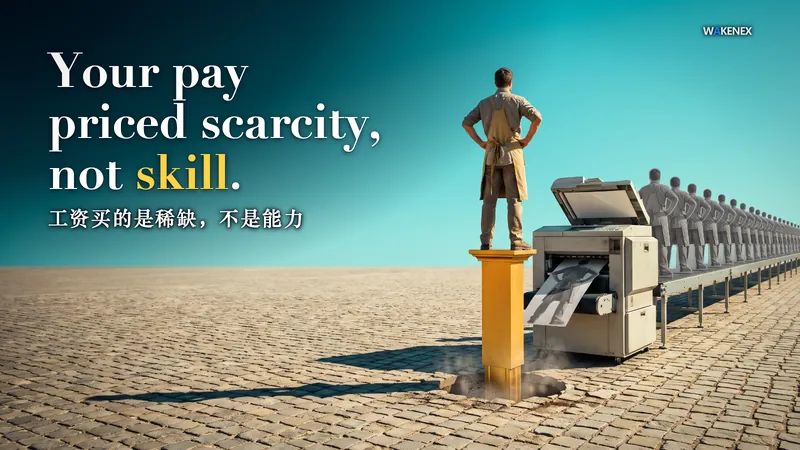
AI's first cut to knowledge work is pay, not layoffs.你的工资给‘稀缺’定价,不是给‘能力’定价;当 AI 达到平均水平、能以算力成本复制,稀缺消失,工资随之下跌。
New research from DeepMind cofounder Shane Legg and colleagues reaches a counter-intuitive result: in a 14-person model economy, when AI merely matches the human average, specialist pay falls from 4.15 to 2.90 (about 30%) with no one laid off.
DeepMind 联合创始人 Shane Legg 一组新研究今天(10 月 31 日)引出一个反直觉的结论:AI 对知识工作者的第一刀不是裁员,是降薪——在一个 14 人的模型经济里,当 AI 只达到人类平均水平,专家薪资就从 4.15 掉到 2.90,降了约 30%,一个人都没被裁。
Open note阅读短评