Crypto's answer to key theft is not self-custody; control just moved.加密货币对密钥被盗的答案不是『自己做自己的银行』;控制权只是换了位置。

At its first digital-assets symposium in New York today, October 28, Google previewed Multi-Party Compute: a private key is split into shares spread across Google Cloud, a bank's own hardware, and rival clouds, while a policy engine decides which transactions can sign. Alphabet already runs it on its own holdings, several large financial institutions are in private preview, and commercial access is set for early 2027.
The pitch is that this removes the single point of failure: the one stored key that, by the figures Google cited, accounted for 43.8% of all crypto stolen in 2024 and about 40% of the $16.69 billion lost to hacks through June. That part is real. A split key is harder to steal than a whole one.
But a single point of failure is not the same as a single point of control. The control moved. What decides whether value leaves a wallet is no longer a key in a vault; it is the policy engine, whoever writes its rules, and the clouds that must stay online for a signature to clear. Crypto was sold as removing the trusted third party. For institutions, the trusted third party did not vanish. It became the firm that runs the key-management layer.
For anyone building leverage, the pattern repeats: the security layer, not the asset, is where power concentrates. Watch who writes the signing policy.
This is wrong if the shipped systems let no single provider, Google included, block or force a signature, with governance that is provably distributed. The early-2027 terms will show which it is.
Research, not investment advice.
10 月 28 日,Google 在纽约举办首届数字资产峰会,预览了 Multi-Party Compute(多方计算,MPC):一把私钥被拆成若干份密钥分片,分别存放在 Google Cloud、机构自有硬件和竞争对手的云上,由一个策略引擎来决定哪些交易可以签名。Alphabet 已经用它来保管自己的数字资产,多家大型金融机构在私有预览中,商用将在 2027 年初开放。
它的卖点是:这消除了单点故障——那把被存起来的完整私钥。按 Google 援引的数据,2024 年被盗加密资产中有 43.8% 源自私钥泄露,截至今年 6 月约 166.9 亿美元的被黑损失里约 40% 来自私钥被攻破。这部分是真的:拆开的密钥确实比完整的一把更难被盗。
但『没有单点故障』不等于『没有单一控制点』。控制点只是挪了位置。决定资产能不能离开钱包的,不再是保险库里的那把钥匙,而是策略引擎、编写策略规则的人,以及必须保持在线、签名才能完成的那些云。加密货币当初卖的是『去掉可信第三方』。对机构而言,可信第三方并没有消失,它变成了运行密钥管理层的那家公司。
对任何想建立杠杆的人,这个规律一再重复:权力集中的地方是安全层,而不是资产本身。要盯的是谁在编写签名策略。
如果最终落地的系统做到任何单一方(包括 Google)都无法阻止或强制一次签名、且治理可被证明是分布式的,这个判断就该修正。2027 年初的实际条款会说明它是哪一种。
研究,不构成投资建议。
Sources来源
Add WAKENEX as a preferred source on Google在 Google 把 WAKENEX 设为首选来源
READ NEXT接着读
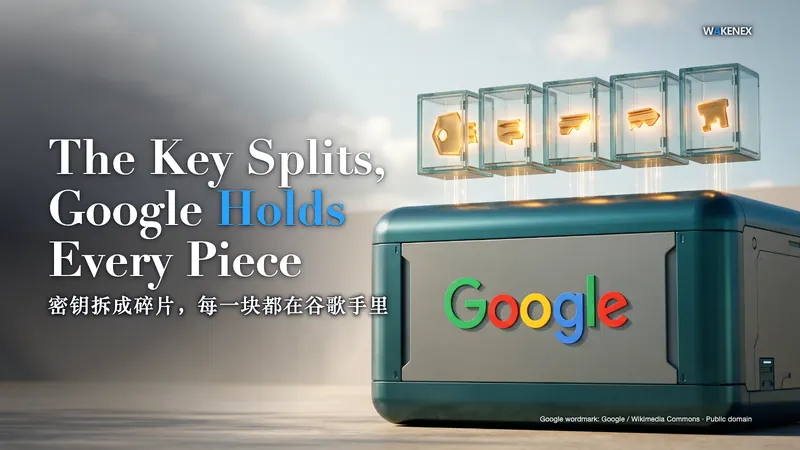
Google's Multi-Party Compute buys stronger key security at one new dependence.谷歌的 Multi-Party Compute 用更强的密钥安全,换来一项新的依赖。
Your coins now move only when Google's cloud agrees to sign. That is the trade worth seeing.
你的币,从此只有在谷歌的云同意签名时才动得了。这就是值得看清的那笔交易。
Open note阅读短评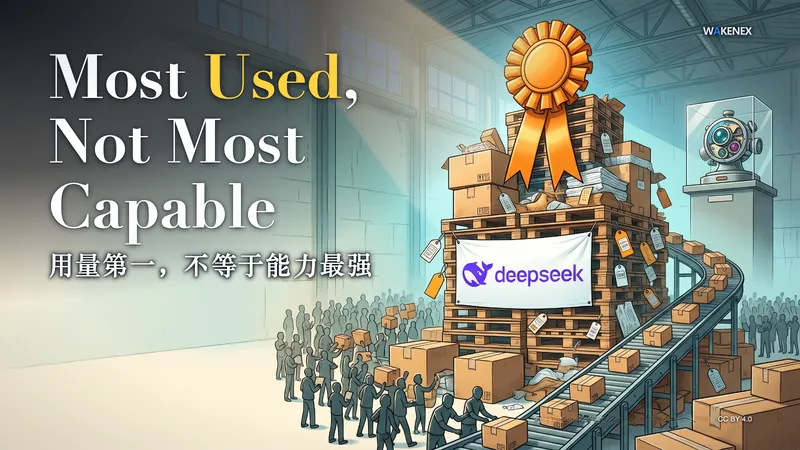
Most-used on OpenRouter is a price signal, not proof of capability.在 OpenRouter 上用量第一,是价格信号,不是能力的证明。
As of October 27, DeepSeek routes about 46% of the tokens developers send through OpenRouter, more than OpenAI (~12%) and Google (~5%) combined, and the platform's top two models are both the cheap DeepSeek V4.1 Flash variant. The easy read is that DeepSeek is winning the model race. The ranking says something narrower.
截至 10 月 27 日,开发者通过 OpenRouter 发送的 token 里,约 46% 流向 DeepSeek,超过 OpenAI(约 12%)和 Google(约 5%)两家之和;平台排名前两位的,都是便宜的 DeepSeek V4.1 Flash 版本。顺手的读法是『DeepSeek 正在赢下模型竞赛』。但这个排名说的是更窄的一件事。
Open note阅读短评
The Fed's 10-2 hold isn't a verdict that inflation is beaten.美联储 10 比 2 的按兵不动,并不是通胀已被制服的判决。
It's a divided committee buying time. The Committee kept the funds rate at 3.75%-4% while its own statement admits inflation "remains elevated," and two of twelve voters, Lisa Cook and Beth Hammack, pushed to hike another quarter point instead.
它只是一个意见分裂的委员会在拖延时间。委员会把联邦基金利率维持在 3.75% 到 4% 的区间,而它自己的声明却承认通胀『仍然偏高』;十二位票委中有两位——丽莎·库克(Lisa Cook)和贝丝·哈马克(Beth Hammack)——主张应当再加息四分之一个百分点。
Open note阅读短评