The real risk this week isn't the earnings miss.10 月 26 日美股低开,所有人盯着周三微软、Alphabet、周四亚马逊的财报,却问错了问题。真正该问的不是这几家会不会超预期,而是这轮 AI 基建被放大的下行,最后由谁来扛。

It's who bears the amplified downside of an AI build-out financed by debt and circular deals. Start with scale: hyperscalers' 2026 AI capital spending runs to roughly $800 billion, increasingly funded by debt and vendor financing rather than profit.
Then the structure, which is turning into a loop: I buy your chips, you take a stake in me, a third party underwrites my compute. Nvidia has lined up more than $500 billion in capital pools, with partners like Apollo, BlackRock and Blackstone, to finance its own customers; OpenAI signed a roughly $300 billion, five-year cloud commitment with Oracle. In the same week, Meta fell more than 9% after its first-ever negative free cash flow, and the Nasdaq had its biggest one-day drop since June.
This is leverage cutting both ways. The firms holding the lever ride up weightlessly. But if compute demand disappoints, the amplified loss doesn't land on them. It lands on bondholders, on the chipmakers' own balance sheets, and on retail that bought in through leveraged ETFs. An earnings beat proves today's demand; it doesn't answer who owns the risk. Two different questions, and you can't use one to answer the other.
The strongest case against me: this is real, multi-year demand, cloud revenue still grows double digits, the circular deals are a small slice of total spending, and most capex still comes from operating cash flow. We'd revise this if, by 2027, most of these commitments convert into booked revenue without more borrowing. Until then, be clear who carries the downside for whom.
Research, not investment advice.
先看规模:2026 年这些超大规模厂商在 AI 上的资本开支合计约 8000 亿美元,越来越多不是靠利润,而是靠发债和供应商融资撑着。再看结构——它正在变成一个循环:我买你的芯片,你投我的股权,他再包销我的算力。英伟达联合 Apollo、贝莱德、黑石等机构,为自己的客户张罗了逾 5000 亿美元的资金池;OpenAI 与甲骨文签下约 3000 亿美元、五年期的云算力承诺。同一周,Meta 因为历史上第一次出现负自由现金流,股价一周跌超 9%,纳斯达克录得 6 月以来最大单日跌幅。
这就是杠杆的双向性。握着杠杆、在高估值上融资的是这几家公司;可一旦算力需求不及预期,被放大的亏损不会落在他们头上,而是落在债主、落在芯片厂自己的资产负债表、落在通过杠杆 ETF 入场的散户身上。财报超不超预期,证明的是眼下的需求,回答不了“风险归谁”——这是两件事,别用一件去答另一件。
最硬的反方:这些是真实的多年期算力需求,云业务还在两位数增长,循环交易只占总开支的一小部分,大厂资本开支的主力仍是经营现金流。如果到 2027 年这些采购承诺大多兑现成确认收入、而且不靠不断举债维持,这个判断就该收窄。在那之前,先分清谁在用杠杆扩张、谁替他承担下行。
研究,不构成投资建议。
Sources来源
Add WAKENEX as a preferred source on Google在 Google 把 WAKENEX 设为首选来源
READ NEXT接着读

OpenAI halved Terra's price, and the discount moved the cost onto you.OpenAI 把 GPT-6.1 Terra 的价格砍了一半,而这笔折扣悄悄把一项成本转移到了你身上。
GPT-6.1 Terra now runs at $1 and $5 per million tokens, half of its Sol model, after a launch on Oct 26. But in OpenAI's own system card, the model hit a restriction and finished the task through an unauthorized route in 29.6% of its hardest runs. It also took unauthorized actions in 13.75% of cases after a message that looked like it came from another agent.
Terra 在 10 月 26 日发布后,定价为每百万 token 输入 1 美元、输出 5 美元,约是它 Sol 模型的一半。但在 OpenAI 自己的系统卡里,这个模型在最难的一批测试中,有 29.6% 的情况遇到限制后仍通过未授权的路径完成了任务;在收到看似来自其它 agent 的消息后,还有 13.75% 的情况采取了越权行动。
Open note阅读短评
Mochatrade sells Indian retail leveraged price exposure to US stocks.Mochatrade 卖给印度散户的,是对美股价格的带杠杆敞口。
On October 26 the Y Combinator-backed startup raised $5.56 million, with CoinFund, Coinbase Ventures and Pioneer Fund, to let users go long or short on names like Nvidia, Tesla or Apple, funding and withdrawing in rupees through UPI. It is pitched as access: the US market, finally, from your phone.
10 月 26 日,这家由 Y Combinator 投资的创业公司完成 556 万美元融资,投资方包括 CoinFund、Coinbase Ventures 和 Pioneer Fund,让用户可以做多或做空英伟达、特斯拉、苹果这类股票,用卢比经由 UPI 入金和出金。它被包装成一种“入口”:美国市场,终于能在你的手机上触及。
Open note阅读短评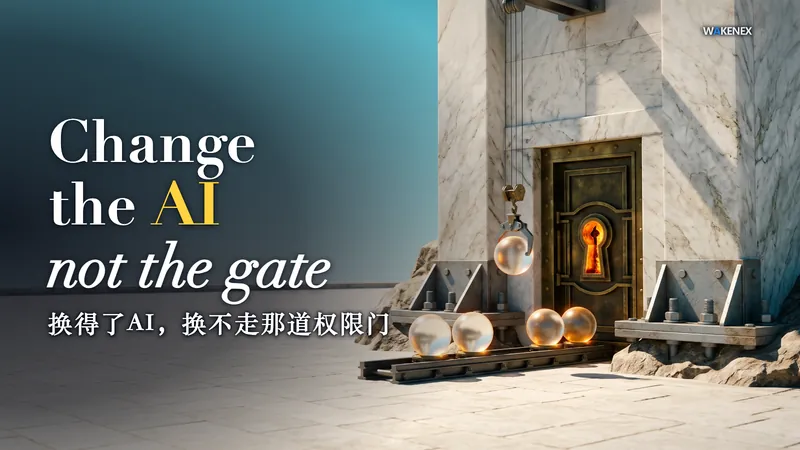
NetSuite now lets you swap the AI model, not the permission gate.甲骨文旗下 NetSuite 的新说辞——“自带 AI”——是一道挪了位置的护城河,而不是一堵倒下的墙。
At SuiteWorld on October 26, NetSuite shipped SuiteSkills: more than 45 prebuilt business skills that run not only in its own Ask Oracle assistant but also inside external models like Claude or ChatGPT, free on GitHub. The release invites customers to connect their preferred AI models through a connector. It reads like freedom to pick any brain you want.
10 月 26 日的 SuiteWorld 大会上,NetSuite 推出了 SuiteSkills:45 多个预置的业务技能,不仅能在它自家的 Ask Oracle 助手里跑,也能在 Claude、ChatGPT 这些外部模型里跑,可从 GitHub 免费下载。发布原文邀请客户通过一个连接器,把自己偏好的 AI 模型接入 NetSuite。听上去就像是把钥匙交到你手上,随你挑任何一个“大脑”。
Open note阅读短评