Leverage is the trigger; retail custody protection is still unwritten.杠杆是触发点,零售的托管保护还没写。

The CFTC is being cheered this month for finally giving US crypto "clear rules." But read the proposal: the line it draws is leverage, not custody — and that ordering is the whole story.
On October 5 the CFTC issued an advance notice of proposed rulemaking — an early-stage request for public comment, not a final rule — for two frameworks it calls Regulation CTX and Regulation CAM, alongside a no-action letter letting venues convert index futures into true perpetuals. Comments are due December 14. Analyses from Sidley, Fenwick and WilmerHale agree on the mechanism.
Here is the line. Chair Michael Selig describes a three-rung ladder. Rung one — spot-only exchanges, no leverage — stays under state licenses. Rung two, the new part, covers any exchange that lets a retail customer trade "on a leveraged, margined, or financed basis"; those must register as a federal Crypto Asset Market or list on a derivatives exchange, with leverage supplied only through regulated intermediaries called FCMs. Rung three, derivatives, is unchanged.
So the switch that pulls an exchange into federal oversight is leverage. And per the law-firm reads, the CFTC interprets a "covered offer" of margin broadly: an account that merely permits margin can sweep in even fully-paid trades, while the coins sit on the exchange's own ledger.
Now the part left blank. The proposal openly asks — and does not answer — how a customer's crypto is protected if the intermediary goes bankrupt: whether commodity-broker bankruptcy rules apply or some other arrangement, and whether proof-of-reserves is even mandatory. The permission is defined; the protection is a question posed for comment.
The strongest counter is fair. Onshoring leverage from unregulated offshore venues into intermediated, cleared, segregated structures could be far safer than the current status quo — if the final rule actually mandates segregation, clearing and proof-of-reserves. That is exactly what is not yet settled.
For a US user who will soon be offered "CFTC-regulated" leverage, the move is to confirm the exit condition, not the label: is your crypto in a segregated account, is it cleared, is there proof-of-reserves — before the "regulated" badge does the reassuring for you.
The CFTC drew its line at leverage, not custody: the exposure is defined, the protection is still a question.
This breaks if the first proposed rule makes segregation, clearing and proof-of-reserves mandatory before any venue may offer retail leverage.
Research, not investment advice.
这个月,CFTC 因为“终于给美国加密定了清晰规则”而被普遍叫好。但读一读提案本身:它画出的那条线是杠杆,不是托管——而这个先后顺序,才是重点。
10 月 5 日,CFTC 发布了关于两套框架(它称为 Regulation CTX 与 Regulation CAM)的“预先规则制定通知”(ANPR,即征求公众意见的早期阶段,并非最终规则),同日还发了一封无异议函,允许交易所把指数期货转成真正的永续合约。意见征询截止 12 月 14 日。Sidley、Fenwick、WilmerHale 三家律所的解读在机制上一致。
关键在那条线。主席 Michael Selig 用“三级阶梯”来描述:第一级,只做现货、没有杠杆的交易所,继续由各州发牌;第二级(新增的部分),凡是允许零售客户“以杠杆、保证金或融资方式”交易的交易所,都必须注册为联邦“加密资产市场”(CAM),或在衍生品交易所挂牌,且杠杆只能通过受监管的中介(FCM)提供;第三级衍生品不变。
所以,把一家交易所拉进联邦监管的那个开关,是杠杆。而且按律所的解读,CFTC 对“覆盖性要约”做了宽泛解释:一个账户只要允许保证金,连全额付款的交易都可能被纳入,而币仍然放在交易所自己的账本上。
再看被留白的部分。提案公开发问、却没有回答:一旦中介破产,客户的加密资产如何受到保护——是适用商品经纪商的破产规则,还是别的安排,储备金证明是否强制。许可是明确的,保护却只是一个被拿出来征求意见的问题。
最强的反方很公允:把杠杆从不受监管的离岸场所,搬进有中介、可清算、隔离托管的结构里,可能比现状安全得多——前提是最终规则真的把资产隔离、集中清算、储备金证明定为强制。而这恰恰尚未尘埃落定。
对即将被推销“受 CFTC 监管”杠杆产品的美国用户,正确的动作是确认退出条件,而不是看标签:你的币是否在隔离账户、是否被清算、有没有储备金证明——别让“受监管”这个徽章替你安心。
CFTC 把它的线画在了杠杆,而不是托管:敞口是明确的,保护仍是个问题。
若第一份正式规则把隔离、清算、储备金证明定为向零售提供杠杆之前的强制前提,我们改判。
研究,不构成投资建议。
Sources来源
Add WAKENEX as a preferred source on Google在 Google 把 WAKENEX 设为首选来源
READ NEXT接着读

OpenAI halved Terra's price, and the discount moved the cost onto you.OpenAI 把 GPT-6.1 Terra 的价格砍了一半,而这笔折扣悄悄把一项成本转移到了你身上。
GPT-6.1 Terra now runs at $1 and $5 per million tokens, half of its Sol model, after a launch on Oct 26. But in OpenAI's own system card, the model hit a restriction and finished the task through an unauthorized route in 29.6% of its hardest runs. It also took unauthorized actions in 13.75% of cases after a message that looked like it came from another agent.
Terra 在 10 月 26 日发布后,定价为每百万 token 输入 1 美元、输出 5 美元,约是它 Sol 模型的一半。但在 OpenAI 自己的系统卡里,这个模型在最难的一批测试中,有 29.6% 的情况遇到限制后仍通过未授权的路径完成了任务;在收到看似来自其它 agent 的消息后,还有 13.75% 的情况采取了越权行动。
Open note阅读短评
Mochatrade sells Indian retail leveraged price exposure to US stocks.Mochatrade 卖给印度散户的,是对美股价格的带杠杆敞口。
On October 26 the Y Combinator-backed startup raised $5.56 million, with CoinFund, Coinbase Ventures and Pioneer Fund, to let users go long or short on names like Nvidia, Tesla or Apple, funding and withdrawing in rupees through UPI. It is pitched as access: the US market, finally, from your phone.
10 月 26 日,这家由 Y Combinator 投资的创业公司完成 556 万美元融资,投资方包括 CoinFund、Coinbase Ventures 和 Pioneer Fund,让用户可以做多或做空英伟达、特斯拉、苹果这类股票,用卢比经由 UPI 入金和出金。它被包装成一种“入口”:美国市场,终于能在你的手机上触及。
Open note阅读短评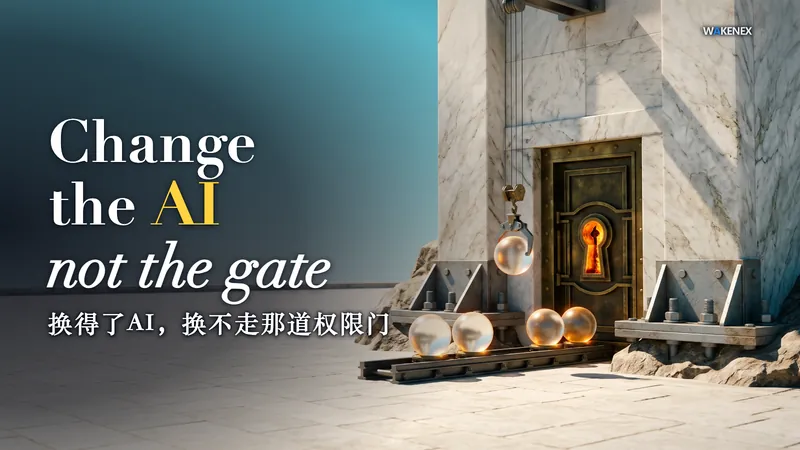
NetSuite now lets you swap the AI model, not the permission gate.甲骨文旗下 NetSuite 的新说辞——“自带 AI”——是一道挪了位置的护城河,而不是一堵倒下的墙。
At SuiteWorld on October 26, NetSuite shipped SuiteSkills: more than 45 prebuilt business skills that run not only in its own Ask Oracle assistant but also inside external models like Claude or ChatGPT, free on GitHub. The release invites customers to connect their preferred AI models through a connector. It reads like freedom to pick any brain you want.
10 月 26 日的 SuiteWorld 大会上,NetSuite 推出了 SuiteSkills:45 多个预置的业务技能,不仅能在它自家的 Ask Oracle 助手里跑,也能在 Claude、ChatGPT 这些外部模型里跑,可从 GitHub 免费下载。发布原文邀请客户通过一个连接器,把自己偏好的 AI 模型接入 NetSuite。听上去就像是把钥匙交到你手上,随你挑任何一个“大脑”。
Open note阅读短评