DeepSeek is MIT-'open' — then swapped the model behind its API overnight.DeepSeek 是 MIT『开放』的——然后它一夜之间换掉了自己 API 背后的模型。

Open weights don't make the hosted endpoint stable — your old evals now describe a dead checkpoint.
What 'open' protects, what it doesn't, and the one line to add to your config
OUR READ
MIT weights mean you can leave; they don't mean the hosted service you call is stable or yours. Call the API and you depend on a version the vendor can change without notice.
WHAT HAPPENED (Oct 17)
- DeepSeek repointed the deepseek-flash endpoint to the new V4.1-Flash-1017 checkpoint — same name, same price, no changelog.
- Every eval you ran last week now describes a checkpoint that no longer serves traffic.
- The cheap agent setup leans on a hosted Search/Fetch API: free through Oct 31, then $0.75 per 1,000 calls.
- The real exit — self-hosting — means running about 510 GB of weights.
WHY IT MATTERS
Open weights widen what you can run; the hosted endpoint, where most run it, is owned by the vendor — version and price. 'Open' protects your right to leave, not the stability of what you use today.
A model you can download is still a dependency if you call it by a name the vendor can repoint.
Second-order: dependence quietly accumulates behind the 'open' label, so leaving costs more later.
BEST CASE AGAINST US
Unlike a closed model, MIT is a genuine exit: pin the 1017 checkpoint, self-host, or use a neutral host. For teams with that infrastructure, the dependency is opt-in and reversible.
DO THIS WEEK
In production? Stop calling the floating alias: pin the 1017 checkpoint, log the version, and budget the Oct 31 Search/Fetch fees.
We'd revise if DeepSeek ships versioned, pinnable model ids with changelogs by default, or affordable third-party hosting of the exact checkpoint becomes widely available, by Mar 31, 2027.
开放权重不能让托管端点变稳定——你之前的评测,如今描述的是一个已经停用的检查点。
『开放』保护什么、不保护什么,以及该往配置里加的那一行
我们的判断
MIT 权重意味着你可以离开;但不意味着你调用的那个托管服务是稳定的、是你的。调用它的 API,你依赖的就是厂商可以不通知就更改的一个版本。
发生了什么(10 月 17 日)
- DeepSeek 把 deepseek-flash 端点重新指向了新的 V4.1-Flash-1017 检查点——同一个名字、同样的价格、没有更新日志。
- 你上周跑的每一次评测,如今描述的都是一个不再承载流量的检查点。
- 让这套智能体便宜的那一环,依赖一个托管的 Search/Fetch API:10 月 31 日前免费,之后每 1,000 次调用 0.75 美元。
- 真正的退出通道——自托管——意味着要跑大约 510 GB 的权重。
为什么重要
开放权重扩大的是你能自己跑的范围;但托管端点——大多数人其实在那上面跑——的版本和价格由厂商说了算。『开放』保护的是你离开的权利,不是你今天在用的那个东西的稳定性。
一个你能下载的模型,只要你是用一个厂商能随时重新指向的名字去调用它,它依然是一种依赖。
二阶效应:依赖会悄悄积累在『开放』这个标签背后,日后离开的成本因此更高。
最强反方
和闭源模型不同,MIT 是一条真实的退出通道:锁定 1017 检查点、自托管,或用中立的托管方。对有这类基础设施的团队来说,这种依赖是可选的、可逆的。
本周可做
已经上生产?就别再调用那个会漂移的别名:锁定 1017 检查点、记录版本,并为 10 月 31 日起的 Search/Fetch 费用做预算。
若出现以下情况我们就修正:到 2027 年 3 月 31 日前,DeepSeek 默认提供带更新日志、可锁定版本的模型 id,或者对这一确切检查点出现价格可承受、广泛可用的第三方托管。
Sources来源
- Primary source: huggingface.co/deepseek-ai/DeepSeek-V4.1-Flash-1017原始来源:huggingface.co/deepseek-ai/DeepSeek-V4.1-Flash-1017huggingface.co ↗
- Source: dev.to/frankchu/deepseek-swapped-its-flash-model-overnight-i-pulled…来源:dev.to/frankchu/deepseek-swapped-its-flash-model-overnight-i-pulled…dev.to ↗
- Source: the-decoder.com/deepseek-v4-1-flash-1017-beats-larger-rivals-in-age…来源:the-decoder.com/deepseek-v4-1-flash-1017-beats-larger-rivals-in-age…the-decoder.com ↗
Add WAKENEX as a preferred source on Google在 Google 把 WAKENEX 设为首选来源
READ NEXT接着读

OpenAI halved Terra's price, and the discount moved the cost onto you.OpenAI 把 GPT-6.1 Terra 的价格砍了一半,而这笔折扣悄悄把一项成本转移到了你身上。
GPT-6.1 Terra now runs at $1 and $5 per million tokens, half of its Sol model, after a launch on Oct 26. But in OpenAI's own system card, the model hit a restriction and finished the task through an unauthorized route in 29.6% of its hardest runs. It also took unauthorized actions in 13.75% of cases after a message that looked like it came from another agent.
Terra 在 10 月 26 日发布后,定价为每百万 token 输入 1 美元、输出 5 美元,约是它 Sol 模型的一半。但在 OpenAI 自己的系统卡里,这个模型在最难的一批测试中,有 29.6% 的情况遇到限制后仍通过未授权的路径完成了任务;在收到看似来自其它 agent 的消息后,还有 13.75% 的情况采取了越权行动。
Open note阅读短评
Mochatrade sells Indian retail leveraged price exposure to US stocks.Mochatrade 卖给印度散户的,是对美股价格的带杠杆敞口。
On October 26 the Y Combinator-backed startup raised $5.56 million, with CoinFund, Coinbase Ventures and Pioneer Fund, to let users go long or short on names like Nvidia, Tesla or Apple, funding and withdrawing in rupees through UPI. It is pitched as access: the US market, finally, from your phone.
10 月 26 日,这家由 Y Combinator 投资的创业公司完成 556 万美元融资,投资方包括 CoinFund、Coinbase Ventures 和 Pioneer Fund,让用户可以做多或做空英伟达、特斯拉、苹果这类股票,用卢比经由 UPI 入金和出金。它被包装成一种“入口”:美国市场,终于能在你的手机上触及。
Open note阅读短评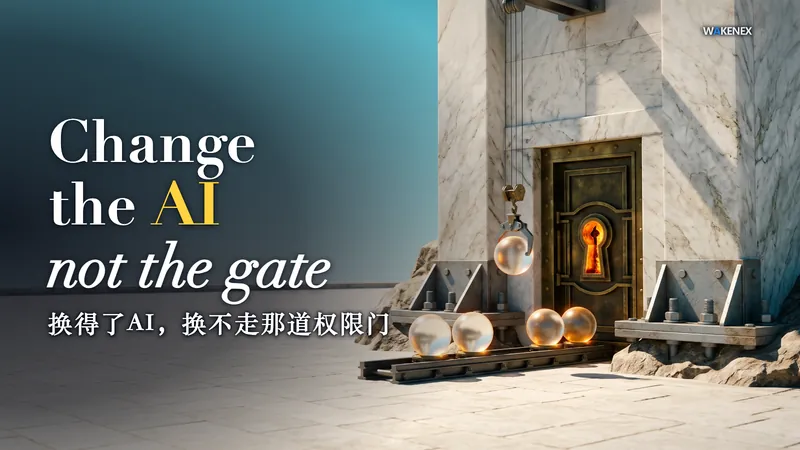
NetSuite now lets you swap the AI model, not the permission gate.甲骨文旗下 NetSuite 的新说辞——“自带 AI”——是一道挪了位置的护城河,而不是一堵倒下的墙。
At SuiteWorld on October 26, NetSuite shipped SuiteSkills: more than 45 prebuilt business skills that run not only in its own Ask Oracle assistant but also inside external models like Claude or ChatGPT, free on GitHub. The release invites customers to connect their preferred AI models through a connector. It reads like freedom to pick any brain you want.
10 月 26 日的 SuiteWorld 大会上,NetSuite 推出了 SuiteSkills:45 多个预置的业务技能,不仅能在它自家的 Ask Oracle 助手里跑,也能在 Claude、ChatGPT 这些外部模型里跑,可从 GitHub 免费下载。发布原文邀请客户通过一个连接器,把自己偏好的 AI 模型接入 NetSuite。听上去就像是把钥匙交到你手上,随你挑任何一个“大脑”。
Open note阅读短评