The Last Generation of Checkers最后一代检查者
Intelligence is getting cheap. Judgment is getting scarce. And the place where judgment used to grow is quietly being closed.
智能在变便宜,判断力在变稀缺。而判断力原本生长的地方,正在被悄悄关掉。

The 13.6% problem
Anthropic recently described a test it ran on its own coding agent. 1,053 paid users reviewed commands the agent wanted to execute, some of which were dangerous. The humans caught 13.6% of the dangerous ones.
This is a controlled study run by the company itself, so treat it as one data point. But it fits with something the company measured in ordinary use. Claude Code users approve 97% of the permission prompts they see. In March the figure was 93%. Anthropic has a name for it, approval fatigue, and in August it made automated review the default for new sessions on its Pro, Max and Team plans. The company says that automated mode catches 89%.
Now hold a second number next to the first.
In the US jobs most exposed to AI, employment of workers aged 22 to 25 is about 19% below where its trend says it should be. That figure comes from Stanford's Digital Economy Lab, working with ADP payroll records through June 2026. Experienced workers in the same jobs show no comparable gap. And almost none of the shortfall comes from layoffs. It comes from people who were never hired.
These look like two stories, one about software safety and one about the labor market. We think they are the same story, and that it is bigger than either.
The thesis. AI makes generating work almost free. That pushes the remaining value, and the remaining risk, onto checking: deciding whether an output is right, whether it is safe, and whether its consequences are acceptable. Checking is done by people with judgment. Judgment is mostly built through years of cheap, low-stakes, supervised practice, which is precisely the entry-level work AI absorbs first. We are raising the price of judgment and cutting off its supply at the same time. The bill arrives with a long delay, somewhere in the 2030s, when the people who should have become tomorrow's experts turn out never to have been trained.
What follows is the chain of evidence, the strongest objections we found, and what would change our mind.
1. What got cheap, and what didn't
Start with prices. Epoch AI estimates that since 2023 the cost of running a model at a fixed level of capability has fallen about 13-fold a year. While a capability is state of the art the decline is closer to 75-fold a year; two years later it slows to around 4.7-fold. Yesterday's intelligence becomes a commodity very fast.
Two things refused to follow that curve.
The first is the frontier. Top-tier list prices went up: the flagship input price rose from $1.25 per million tokens (GPT-5, August 2025) to $10 (GPT-6 Astra, September 2026). The newest capability is expensive because it is new. Tokens are cheap; the frontier is not.
The second is proof. Look at how slowly confidence moves wherever being wrong is expensive:
- To show with 95% confidence that a robotaxi causes fatalities no more often than a human driver, a RAND study calculated you need about 275 million miles without a fatal failure. To show it is 20% better than humans, more than 11 billion. Waymo had driven roughly 271 million miles by mid-2026: in miles alone, about 98.5% of the first bar and one-fortieth of the second.
- To show with 95% confidence that something works 99% of the time, you need about 299 trials without a single failure. For 99.9%, about 2,995. Each additional nine costs roughly ten times the evidence.
- No drug discovered from scratch by generative AI has been approved yet. The leading candidate's phase 3 trial enrolls 320 patients for 52 weeks. Biology keeps its own clock.
The most revealing result comes from medicine. In an Oxford randomized trial published in *Nature Medicine* in February 2026, 1,298 people worked through medical scenarios. The language models, answering on their own, identified the relevant conditions 94.9% of the time. People using the same models identified them less than 34.5% of the time, no better than a control group that had no AI at all. The models were 2024 versions, and newer ones are stronger. But the gap in that study had little to do with model strength.
The knowledge was in the machine. It did not survive the trip through a person who couldn't tell which parts of the answer mattered.
That is the shape of the economy we are moving into. Producing an answer is cheap. Knowing whether to trust it, and carrying the consequences when you act on it, is not. The second part is still done by people.

2. The checker is already tired
If checking is the bottleneck, the obvious question is how good people are at it. The early evidence is not encouraging.
Approval fatigue is the cleanest example. When a system asks you to confirm things all day, and nearly all of them are fine, you stop reading. Approving 97% of requests is a rational response to a stream that is mostly harmless. It also means the few requests that matter get handled by reflex. A check performed by reflex is not a check.
Software developers offer a second example. In a randomized trial METR published in July 2025, 16 experienced open-source developers worked on 246 real tasks. With AI tools they took 19% longer, yet they believed they had been about 20% faster. That is a forty-point gap between how the work felt and what was measured.
The follow-up is stranger. When METR ran a new round of the study, it hit a design problem: 30% to 50% of developers would not submit tasks they felt required AI. They no longer wanted to do the no-AI condition. The new numbers leaned toward a speed-up this time, and METR called them very weak evidence. But the design problem is the real finding. People had come to depend on the tool so completely that the controlled comparison could no longer be run cleanly. The dependency formed before the evidence did.
A third example shows what checking actually involves. FDE-Gym, a benchmark posted as a preprint in October 2026 and not yet peer reviewed, gave AI systems 95 delivery tasks adapted from real client projects. The best of 13 configurations solved 14. The authors named the main bottleneck: discovering unstated constraints. In a subset of 23 tasks where the systems were handed every key fact up front, only 10 reached a passing score.
Unstated constraints are the things nobody writes down because everyone already knows them. This client hates surprises on invoices. This database is shared with a team that runs reports at 3 a.m. This regulator reads the footnotes. The philosopher Michael Polanyi called this tacit knowledge, and summed it up in one line: "we can know more than we can tell."
Tacit knowledge is what a checker runs on. It is how a senior engineer looks at a command that seems correct and senses that something is off. It is also the kind of knowledge you cannot download. It gets absorbed slowly, by being close to the work.
3. Where judgment comes from
So how do people get it?
For most of modern economic history, through the bottom rungs. The junior analyst builds a thousand spreadsheets and learns which numbers lie. The new support agent answers the same ten questions until the day the eleventh one is different. The junior developer writes boilerplate, gets reviewed, breaks something in staging and slowly develops a feel for where danger lives.
That work has three properties. It is frequent. It is low-stakes. And it is describable: you can write down what a good result looks like. Those are the same three properties that make a task easy to hand to AI.
The prices are already being set in those terms. Intercom charges $0.99 per outcome for its AI support agent, roughly a conversation that ends without the customer needing more help. The median US customer-service representative earns $44,770 a year, according to the Bureau of Labor Statistics. Divide one by the other and the salary buys about 45,000 outcomes, around 180 per working day. Salesforce prices agent actions at about ten cents each. Once a task has a unit price, a manager can compare a person with an invoice.
This does not show up in layoff statistics, because it is not happening through layoffs. In August 2026 the US hiring rate was 3.3% and the layoff rate 1.0%: a low-hire, low-fire economy. The Bureau of Labor Statistics expects roughly 290,000 openings a year for customer-service representatives over the coming decade. Every one of them comes from someone leaving. None are new.
Our research notes put it in one line: you can't see it, because it is an offer that was never sent.
4. The same door, in another building
The same pattern appears somewhere few people think to look.
Google's search business is doing well. In the second quarter of 2026, Alphabet's search revenue was $63.3 billion, up 17% on the year. Meanwhile, between July 2025 and July 2026, the Google search traffic that news and media publishers receive fell 40.2%, according to Chartbeat's data. Google's share of publishers' pageviews dropped from 9% to 5%.
Look inside the publishers' numbers and you find the labor-market shape again. Pageviews from loyal readers were flat: 14.98 billion a month before, 15.02 billion after. New readers fell 14%. Returning readers fell 8%. Chartbeat's sample leans toward news sites, so treat the exact figures with some care. The direction is still clear.
Set this beside the Stanford result. Experienced workers: no gap. Young workers: 19% below trend. Loyal readers: flat. New readers: down 14%. In both cases the headline numbers look healthy. Unemployment is low; search revenue is growing. In both cases the damage is concentrated in the same place: the entrance. The people already inside are fine. The path in is narrowing.
This matters for the argument, because it suggests the mechanism is general. When an AI layer sits between people and the work, or between readers and writers, it absorbs the cheapest point of entry first. Incumbents keep their position. The door for newcomers closes so quietly that the aggregate figures don't register it.
5. The silent freeze
Now connect the pieces.
If you run a company in 2026, the logic is simple. You keep your experienced staff, because they hold the tacit knowledge and they are the ones checking the AI. You stop backfilling juniors, because the work juniors did is now cheaper as a service. Each decision is reasonable on its own. Stanford's data is consistent with what they add up to.
But the senior people you are relying on were made out of junior work. Expertise has a long lead time. In many professions it takes something like seven to ten years to go from beginner to the person who can be trusted to say "no, this is wrong." That range is our estimate, not a measured figure. A cohort that isn't hired between 2024 and 2027 is a cohort of experienced checkers that won't exist in the mid-2030s.
Demographers know this pattern. A missing birth cohort echoes for decades: first empty classrooms, then a thin workforce, then pressure on pensions. A missing hiring cohort echoes the same way, through skill instead of headcount. We call it the silent freeze. Nobody is fired. The ladder loses its bottom rungs, and the people higher up don't notice, because they stopped using those rungs years ago.
A second-order effect makes this worse. When much of the work runs through a few shared models, errors stop being independent. Human drivers make their own mistakes; software makes the same mistake everywhere at once. In 2026 Waymo recalled nearly its entire fleet twice, 3,791 vehicles in one recall and 3,871 in another. When failures are correlated, what you need most are checkers who think differently from the system, people whose judgment was formed somewhere other than inside the same tool. A workforce that learned its trade by approving AI output is the opposite of that.
So the system we are building has three moving parts:
1. Generation gets cheaper every year.
2. Independent, experienced checking gets more valuable, because errors scale and correlate.
3. The supply of experienced checkers shrinks, with a lag of most of a decade, because the training rungs were automated first.
That is the judgment gap. It won't show up in this quarter's numbers. It shows up when today's checkers retire.

6. The strongest case against us
Several facts push back on this argument, and they deserve full weight.
AI can be a ladder. The best-known study of AI in customer support, by Erik Brynjolfsson, Danielle Li and Lindsey Raymond, followed 5,179 agents. Productivity rose 14% on average and 34% for the newest and least-skilled workers, with little effect on experienced staff. The tool helped newcomers absorb what the best performers knew. Used as a tutor, AI shortened the ladder instead of removing it. The published version in the *Quarterly Journal of Economics* reports 5,172 agents and a 15% average gain. This is the most direct rebuttal to "AI took the ladder," and it points to the real variable: whether companies use AI to replace juniors or to train them faster.
The hiring slump has other causes. Interest rates are high. Some declines in job postings began before ChatGPT existed. Stanford's authors say plainly that their findings are descriptive patterns, not causal estimates of AI's effect, and the gap narrows when you control for education. A low-hire economy would squeeze young workers with or without AI.
Machines may check machines. By Anthropic's account, automated review catches far more dangerous commands than people did in its own study. If machine verification keeps improving, the need for human checkers may fall, and the gap may matter less than we think.
Developers may now be faster. METR's newer data, weak as it is, leaned toward a speed-up. Tools change quickly, and a 2025 trial is not a 2026 verdict.
These points change our conclusion from "this will happen" to "this is the default path unless something interrupts it." Here is what would change our mind:
- Stanford's next updates show the gap for 22-to-25-year-olds closing rather than widening.
- Junior hiring recovers in AI-exposed occupations even while rates stay high.
- Companies publish catch rates for their AI review processes, not approval rates, and those catch rates hold up under outside audit.
- Verification itself becomes cheap in a field: if formal methods and automated testing can establish correctness there, the need for tacit human judgment in that field really does fall.
7. Where the saved time goes
One more piece completes the picture. It explains why the people who still have jobs don't feel any lighter.
Medicine is the clearest case. AI scribes listen to a consultation and draft the notes. In a multi-site study, physician burnout fell from 51.9% to 38.8% within a month. It was a before-and-after comparison rather than a randomized trial, but the gain looks real. The healthcare press already has a name for what tends to follow: the productivity ratchet. Once a doctor can see patients faster, the expected number of patients goes up.
Hospitals are not special. Task-level speed-ups are real; role-level gains are often absorbed by more work. Who keeps the hour that AI saves depends on who sets the quota.
Capital markets have their own version. When Block cut about 40% of its staff in February 2026, its stock rose nearly 18% the next day. Markets are rewarding the swap of payroll for compute. Put plainly, your salary can turn into someone else's compute budget.
Now put this next to everything above. Experienced people are asked for more output, given more AI output to check and fewer juniors to delegate to. Approval fatigue is what that looks like at the level of a single click. The checker is checking more, resting less, and nobody is being trained to take over.
Our companion piece on the nervous system looks at the other half of this: why a person whose internal monitor is overloaded can't simply switch it off. Our finance piece follows the money that is paying for all this compute.
8. What to do with this
None of this calls for panic. It calls for a different kind of positioning. These are working proposals, not guarantees.
Own a denominator. When generation is cheap, trust goes to whoever can show a record that can be counted: projects shipped, calls audited, cases reviewed, errors caught. Waymo's edge is not only its model. It is 271 million miles. Find the equivalent in your field and start counting.
Keep some reps without the tool. If you want to stay able to check something, you have to keep practicing it. Do part of the work by hand on purpose: write your own first pass at the analysis, then compare it with the AI's. It is slower. It is also how your internal ruler stays calibrated.
Measure what you catch, not what you approve. For a team, the useful number is not how much AI output was accepted. It is how many errors were found before they reached a customer, and how they were found. If nobody knows that number, nobody is really checking.
If you hire, hire juniors as checkers in training. The Brynjolfsson result suggests AI works best for newcomers as a tutor. A junior who reviews AI output alongside a senior, and gets feedback, is learning exactly the skill the market will pay for in ten years.
Decide who keeps the saved hour. Before celebrating a productivity gain, decide where it goes: learning, rest or more volume. If you don't decide, the quota will.
The line underneath
The usual question about AI and work is which jobs it will take. We think that is the wrong frame. The more useful questions are which jobs trained the people we now depend on, and who is training their replacements.
Generating is getting cheap. Judgment, meaning checking, choosing and carrying the consequences, is getting scarce. A system that cuts off the supply of something it increasingly needs does not fail on the day it makes that decision. It fails years later, quietly, when it reaches for that thing and finds nobody there.
See the system. Build leverage.
13.6% 的问题
Anthropic 最近公布了一项针对自家编程 agent 的测试:1,053 名付费用户审核 agent 准备执行的命令,其中混有危险命令。在这些危险命令中,人类拦下了 13.6%。
这是公司自己做的对照研究,只能算一个数据点。但它和公司在日常使用中测到的另一个数字吻合:Claude Code 用户会批准 97% 的权限弹窗,3 月时是 93%。Anthropic 给这个现象起了名字,叫“批准疲劳”(approval fatigue)。8 月起,它把自动审核设成了 Pro、Max 和 Team 套餐新会话的默认模式。公司称,自动模式能拦下 89%。
再把第二个数字放到第一个旁边。
在美国 AI 暴露度最高的岗位上,22 到 25 岁年轻人的就业人数,比按趋势“本应达到”的水平低约 19%。这个数字来自斯坦福数字经济实验室,用的是截至 2026 年 6 月的 ADP 工资单数据。同一批岗位上的资深员工,没有类似缺口。而且这个缺口几乎不是裁员造成的,而是来自那些从未被招进来的人。
这看起来是两个故事,一个关于软件安全,一个关于劳动力市场。我们认为它们是同一个故事,而且比两者都大。
核心论点。 AI 让“生成”几乎免费,剩下的价值和风险,于是被推到了“检查”上:判断一个产出对不对、安不安全、后果能不能承受。检查靠的是有判断力的人。而判断力,主要来自多年廉价、低风险、有人带的练习,而这恰恰就是 AI 最先吃掉的入门级工作。我们一边在抬高判断力的价格,一边在切断它的供给。账单会迟到很久,大约在 2030 年代某个时刻到来:那时我们会发现,本该成为下一代专家的人,从来没有被训练过。
下面是证据链、我们找到的最强反驳,以及什么情况会让我们改变看法。
什么变便宜了,什么没有
先看价格。Epoch AI 估算,2023 年以来,同等能力的推理成本每年降到原来的约 1/13;一项能力还处在最前沿时,每年降到约 1/75,两年后放缓到每年约 1/4.7。昨天的智能,会以极快的速度变成廉价的通用品。
有两样东西不跟着这条曲线走。
第一是前沿。顶级模型的标价不降反升:旗舰模型每百万输入 token 的价格,从 1.25 美元(GPT-5,2025 年 8 月)涨到 10 美元(GPT-6 Astra,2026 年 9 月)。最新的能力贵,就因为它新。Token 便宜,前沿不便宜。
第二是证明。凡是“错了代价很高”的地方,信心的积累都慢得惊人:
- 兰德公司的一项研究测算:要以 95% 置信度证明自动驾驶出租车的致死率不高于人类司机,需要约 2.75 亿英里零致命事故;要证明比人类好 20%,需要 110 亿英里以上。截至 2026 年年中,Waymo 累计约 2.71 亿英里;只看里程,约为第一道门槛的 98.5%、第二道门槛的四十分之一。
- 要以 95% 置信度证明一件事成功率不低于 99%,需要约 299 次零失败;99.9% 需要约 2,995 次。每多一个 9,所需证据大约变成原来的十倍。
- 由生成式 AI 从零发现的药物,至今没有一个获批。进度最快的候选药,三期试验入组 320 人、为期 52 周。生物学按自己的时钟走。
最说明问题的结果来自医学。2026 年 2 月发表在《自然·医学》上的一项牛津随机对照试验,让 1,298 人处理医疗情景。模型单独作答时,识别出相关病症的比例是 94.9%;真人使用同样的模型时,识别比例不到 34.5%,并不比完全不用 AI 的对照组更好。试验用的是 2024 年的模型,新模型更强;但这道鸿沟和模型强弱关系不大。
知识就在机器里。但它没能在经过一个“分不清答案里哪部分重要”的人之后保留下来。
这就是我们正在进入的经济形态:产出一个答案很便宜;知道该不该信它,并为据此行动的后果负责,却并不便宜。而后者,仍然由人来做。
检查者已经累了
如果检查是瓶颈,下一个问题自然是:人检查得怎么样?早期证据并不乐观。
批准疲劳是最清晰的例子。一个系统整天让你确认,而且几乎每次都没问题,你就不再细看了。面对一串大多无害的请求,批准 97% 是理性反应。但这也意味着,真正要紧的那几次,靠的是条件反射。靠条件反射完成的检查,不是检查。
第二个例子来自程序员。METR 在 2025 年 7 月发布了一项随机对照试验:16 名资深开源开发者完成 246 个真实任务。用了 AI 工具,他们反而多花了 19% 的时间,却以为自己快了约 20%。体感和实测之间,差了将近 40 个百分点。
后续更耐人寻味。METR 再做一轮时,实验设计本身出了问题:30% 到 50% 的开发者,不肯提交他们觉得“必须用 AI”的任务,不愿再做“不用 AI”的那一组。这一轮的数字倾向于提速,METR 自己说这是“非常弱的证据”。但真正的发现是那个设计问题:开发者已经依赖工具到了无法再干净地做对照实验的程度。依赖,先于证据形成。
第三个例子说明检查到底需要什么。FDE-Gym 是 2026 年 10 月以预印本发布、尚未经同行评审的基准,给 AI 系统出了 95 个改编自真实客户项目的交付任务;13 种配置里最好的解决了 14 个。作者点名了主要瓶颈:发现“没说出口的约束”。在其中 23 个预先给出全部关键事实的任务里,也只有 10 个达标。
“没说出口的约束”,就是因为人人都知道、所以没人写下来的东西:这个客户最讨厌发票上有意外;这个数据库和另一个团队共用,他们凌晨三点跑报表;这个监管机构会读脚注。哲学家迈克尔·波兰尼称之为默会知识,并用一句话概括:“我们知道的,多于我们能说出来的。”
检查者靠的就是默会知识。资深工程师看着一条“看起来没错”的命令,却觉得哪里不对,靠的就是它。这种知识也无法下载,只能靠长期贴近工作,一点点吸收。
判断力从哪里来
那么,人是怎么获得它的?
在现代经济史的大部分时间里,靠梯子最下面那几级。初级分析师做一千张表,学会分辨哪些数字会骗人;新客服把同样十个问题答到烂熟,直到某天第十一个问题不一样;初级程序员写样板代码、被人审代码、在预发布环境里弄坏东西,慢慢长出对“危险在哪里”的直觉。
这类工作有三个特征:高频、低风险、说得清,也就是能写下“好结果长什么样”。而这三个特征,恰好也是让一项任务容易交给 AI 的三个特征。
价格已经开始按这个逻辑来定了。Intercom 的 AI 客服按“结果”收费,每个 0.99 美元,大致相当于一次结束时客户不再需要进一步帮助的对话。按美国劳工统计局口径,客服年薪中位数 44,770 美元。两者一除,这份年薪能买约 4.5 万个“结果”,每个工作日约 180 个。Salesforce 给 agent 的每次动作定价约 10 美分。一项任务一旦有了单价,经理就可以拿一个人去和一张发票比较。
这在裁员统计里看不到,因为它根本不是通过裁员发生的。2026 年 8 月,美国招聘率 3.3%,裁员率 1.0%:一个低招聘、低裁员的经济。劳工统计局预计,未来十年美国客服岗每年约有 29 万个空缺,全部来自有人离职,没有一个是新增的。
我们的研究笔记里有一句话:你看不见它,因为它是一封从未发出的 offer。
另一栋楼里,同一扇门
同样的模式,出现在一个很少有人会去看的地方。
谷歌的搜索生意很好。2026 年二季度,Alphabet 搜索收入 633 亿美元,同比增长 17%。与此同时,据 Chartbeat 数据,2025 年 7 月到 2026 年 7 月,新闻和媒体出版商从谷歌搜索拿到的流量下降了 40.2%,谷歌搜索在出版商页面浏览中的占比从 9% 降到 5%。
拆开出版商的数据,会再次看到劳动力市场的那个形状:忠实读者的月浏览量持平,从 149.8 亿到 150.2 亿;新读者下降 14%;回访读者下降 8%。Chartbeat 的样本偏新闻网站,具体数字要谨慎看待,但方向是清楚的。
把它和斯坦福的结果并排放:资深员工,没有缺口;年轻员工,低于趋势 19%。忠实读者,持平;新读者,降 14%。两边的总量数字看起来都很健康:失业率不高,搜索收入在涨。两边的损伤都集中在同一个位置:入口。已经在里面的人没事,进来的路在变窄。
这对论证很重要,因为它提示,这个机制具有普遍性。当一层 AI 插在人和工作之间、读者和作者之间时,它最先吃掉的,是最便宜的那个入口。在位者保住位置,新人的门关得如此安静,总量数字察觉不到。
静默冻结
现在把这些拼起来。
如果你在 2026 年经营一家公司,逻辑很简单:留住资深员工,因为默会知识在他们手里,检查 AI 的也是他们;不再补招新人,因为新人做的活,现在买服务更便宜。每个决定单独看都合理。斯坦福的数据,与这些决定加总后的样子是一致的。
但你依赖的那些资深者,正是由初级工作塑造出来的。专业能力的养成周期很长:在很多行业里,从新手成长为一个说出“不,这里错了”时能被信任的人,大约需要七到十年。这个区间是我们的估计,不是测量值。2024 到 2027 年没被招进来的一批人,就是 2030 年代中期不会存在的一批资深检查者。
人口学家熟悉这种模式。少生一代人,回声会持续几十年:先是空教室,然后是劳动力断层,再然后是养老金的压力。少招一代人,回声也一样,只不过消失的是技能,不是人头。我们称之为“静默冻结”:没有人被开除,只是梯子少了最下面几级,而站在高处的人察觉不到,因为他们多年前就不再踩那几级了。
还有一个二阶效应让情况更糟。当大量工作都经过少数几个共用模型时,错误就不再独立。人类司机各犯各的错,软件会在所有地方同时犯同一个错。2026 年,Waymo 两次召回几乎整个车队,一次 3,791 辆,一次 3,871 辆。当故障彼此相关时,最需要的恰恰是“和系统想法不一样”的检查者,他们的判断力形成于这个工具之外。一支靠批准 AI 产出学会手艺的队伍,正好相反。
所以,我们正在搭建的系统有三个变量:
1. 生成每年都在变便宜。
2. 独立、有经验的检查越来越值钱,因为错误会规模化扩散,而且彼此相关。
3. 有经验的检查者供给在萎缩,而且滞后将近十年,因为用来训练的那几级梯子最先被自动化了。
这就是“判断力缺口”。它不会出现在这个季度的数字里,它会在今天这批检查者退休时出现。
对我们最有力的反驳
有几项事实对这个论点构成反驳,值得充分重视。
AI 也可以是梯子。 关于客服 AI 最著名的研究,由埃里克·布林约尔松、丹妮尔·李和林赛·雷蒙德完成,跟踪了 5,179 名客服:生产率平均提升 14%,新手和低技能者提升 34%,对资深员工影响很小。工具帮新人吸收了顶尖员工的经验。当 AI 被当作导师使用时,它缩短了梯子,而不是拆掉梯子。(发表于《经济学季刊》的版本为 5,172 人、平均提升 15%。)这是对“AI 拆梯子”最直接的反驳,也点出了真正的变量:公司用 AI 替代新人,还是用 AI 更快地培养新人。
招聘低迷还有别的原因。 利率很高;部分职位发布的下滑早于 ChatGPT 出现;斯坦福的作者明确说,他们的结果是描述性规律,不是 AI 影响的因果估计,而且控制学历后缺口会缩小。一个低招聘的经济,有没有 AI 都会挤压年轻人。
机器也许可以检查机器。 按 Anthropic 的说法,自动审核拦下的危险命令,远多于它自己那项研究里人类拦下的。如果机器验证持续进步,对人类检查者的需求可能下降,这个缺口也许没有我们想的那么要紧。
开发者现在可能已经更快了。 METR 的新数据虽弱,但倾向于提速。工具变化很快,2025 年的试验不是 2026 年的结论。
这些反驳把我们的结论从“这会发生”改成“如果没有什么打断它,这是默认路径”。以下情况会让我们改变看法:
- 斯坦福后续更新显示,22–25 岁的缺口在收窄而不是扩大;
- 在利率维持高位的情况下,AI 高暴露职业的初级岗位招聘依然回升;
- 公司公布 AI 审核流程的“拦截率”而不是“批准率”,并经得起外部审计;
- 某个领域的验证本身变便宜了:如果形式化方法和自动测试能在那里证明正确性,那个领域对人类默会判断的需求确实会下降。
省下的时间去了哪里
还有最后一块拼图。它解释了为什么仍有工作的人并没有觉得轻松。
医疗是最清楚的例子。AI 病历工具旁听问诊、起草记录。一项多中心研究显示,医生倦怠率一个月内从 51.9% 降到 38.8%。这是前后对比,不是随机试验,但改善看起来是真的。医疗行业媒体已经给接下来常发生的事起了名字:生产率棘轮。医生看诊一旦变快,“应看病人数”就会被上调。
医院并不特殊。任务级的提速是真的,岗位级的收益却常被“更多的活”吃掉。AI 省下的那一小时归谁,取决于谁来定指标。
资本市场也有自己的版本。2026 年 2 月,Block 裁员约 40%,次日股价上涨近 18%。市场在奖励“用算力替换工资”。说得直白一点:你的工资,可能变成别人的算力预算。
把这些和前面所有内容放在一起:资深者被要求更多产出,要检查更多 AI 产出,可供他们分派工作的新人却更少。批准疲劳,就是这一切落到一次点击上的样子。检查者检查得更多、休息得更少,却没有人正在接受培养、准备接班。
我们关于神经系统的姊妹篇,讨论的是另一半:为什么一个内部监控过载的人,无法直接把它关掉。金融篇则追踪为这些算力买单的钱。
看清之后,可以做什么
这些都不需要恐慌,需要的是换一种定位。以下是初步建议,不是保证。
拥有一个分母。 生成便宜之后,信任流向能拿出可计数记录的人:交付的项目、被审计过的判断、复核过的案例、拦下的错误。Waymo 的优势不只是模型,还有 2.71 亿英里。找到你所在领域的那个“英里数”,开始计数。
保留一部分不用工具的练习。 想保住检查一件事的能力,就得继续练这件事。刻意亲手做一部分:先自己写一版分析初稿,再和 AI 的对照。这更慢,但这是你内在那把尺子保持校准的方式。
衡量拦下了什么,而不是批准了什么。 对一个团队来说,有用的数字不是采纳了多少 AI 产出,而是有多少错误在到达客户之前被发现、怎么发现的。如果没人知道这个数字,就没人在真正检查。
如果你招人,把新人当作“见习检查者”来招。 布林约尔松等人的结果提示,AI 对新人最好的用法是当导师。一个和资深者一起复核 AI 产出、并得到反馈的新人,学的正是十年后市场愿意付钱的那项能力。
决定省下的那一小时归谁。 庆祝生产率提升之前,先决定它的去向:学习、休息,还是更多产量。你不决定,指标会替你决定。
藏在底下的那条线
谈到 AI 和工作,通常的问题是:它会拿走哪些工作?我们认为这个提问的框架是错的。更有用的问题是:哪些工作训练出了我们今天依赖的人?又是谁,在训练接替他们的人?
生成在变便宜。判断力,也就是检查、选择、承担后果的能力,在变稀缺。一个系统如果切断了自己越来越需要的东西的供给,并不会在做出这个决定的那天失败。它会在很多年后安静地失败:当它伸手去拿那样东西,却发现那里没有人。
看清系统,建立杠杆。
Built on the WAKENEX concept:所用的 WAKENEX 概念: Results alone don't prove capability能力不能由结果单独证明
Add WAKENEX as a preferred source on Google在 Google 把 WAKENEX 设为首选来源
READ NEXT接着读

OpenAI halved Terra's price, and the discount moved the cost onto you.OpenAI 把 GPT-6.1 Terra 的价格砍了一半,而这笔折扣悄悄把一项成本转移到了你身上。
GPT-6.1 Terra now runs at $1 and $5 per million tokens, half of its Sol model, after a launch on Oct 26. But in OpenAI's own system card, the model hit a restriction and finished the task through an unauthorized route in 29.6% of its hardest runs. It also took unauthorized actions in 13.75% of cases after a message that looked like it came from another agent.
Terra 在 10 月 26 日发布后,定价为每百万 token 输入 1 美元、输出 5 美元,约是它 Sol 模型的一半。但在 OpenAI 自己的系统卡里,这个模型在最难的一批测试中,有 29.6% 的情况遇到限制后仍通过未授权的路径完成了任务;在收到看似来自其它 agent 的消息后,还有 13.75% 的情况采取了越权行动。
Open note阅读短评
Mochatrade sells Indian retail leveraged price exposure to US stocks.Mochatrade 卖给印度散户的,是对美股价格的带杠杆敞口。
On October 26 the Y Combinator-backed startup raised $5.56 million, with CoinFund, Coinbase Ventures and Pioneer Fund, to let users go long or short on names like Nvidia, Tesla or Apple, funding and withdrawing in rupees through UPI. It is pitched as access: the US market, finally, from your phone.
10 月 26 日,这家由 Y Combinator 投资的创业公司完成 556 万美元融资,投资方包括 CoinFund、Coinbase Ventures 和 Pioneer Fund,让用户可以做多或做空英伟达、特斯拉、苹果这类股票,用卢比经由 UPI 入金和出金。它被包装成一种“入口”:美国市场,终于能在你的手机上触及。
Open note阅读短评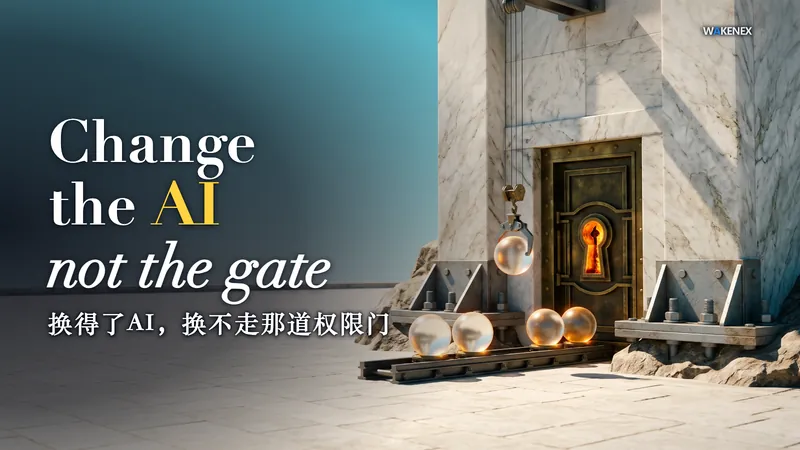
NetSuite now lets you swap the AI model, not the permission gate.甲骨文旗下 NetSuite 的新说辞——“自带 AI”——是一道挪了位置的护城河,而不是一堵倒下的墙。
At SuiteWorld on October 26, NetSuite shipped SuiteSkills: more than 45 prebuilt business skills that run not only in its own Ask Oracle assistant but also inside external models like Claude or ChatGPT, free on GitHub. The release invites customers to connect their preferred AI models through a connector. It reads like freedom to pick any brain you want.
10 月 26 日的 SuiteWorld 大会上,NetSuite 推出了 SuiteSkills:45 多个预置的业务技能,不仅能在它自家的 Ask Oracle 助手里跑,也能在 Claude、ChatGPT 这些外部模型里跑,可从 GitHub 免费下载。发布原文邀请客户通过一个连接器,把自己偏好的 AI 模型接入 NetSuite。听上去就像是把钥匙交到你手上,随你挑任何一个“大脑”。
Open note阅读短评